Re-Establishment of a 705-Year-Old Temple at Panch Khobla, Gujarat
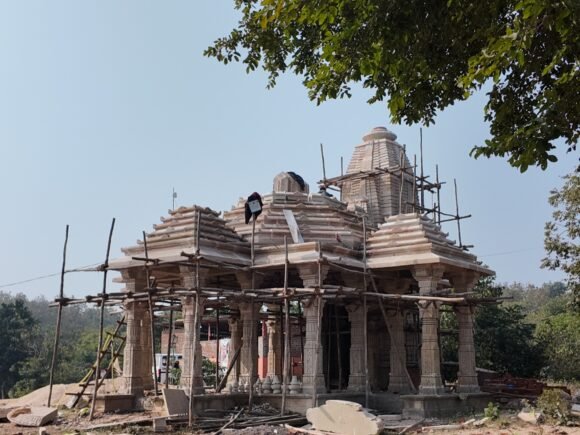
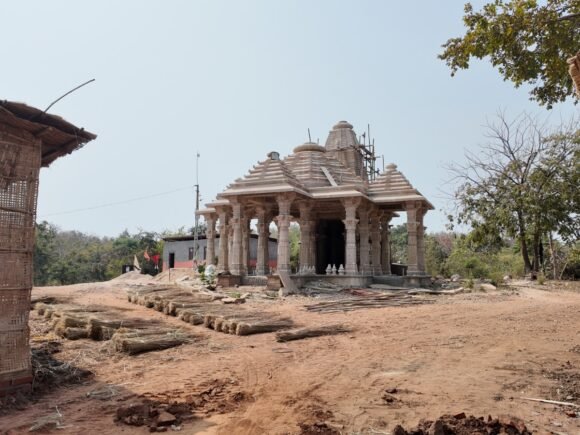
After centuries of silence, neglect, and historical devastation, the ancient temple of Panch
Khobla has been restored to its original stone form in accordance with traditional temple architecture and Shastriya principles.
What was once reduced to ruins is now ready to breathe again. Through the guidance and blessings of Jagadguru Shankaracharya, Govardhan Math Puri Peethadhishwar, Swami Nischalananda Saraswati Ji Maharaj, and the dedicated efforts of Ramdoot Restores, the temple has now been reconstructed in its traditional stone form, following Shastriya and architectural principles.
While structural restoration marks a major milestone, a temple becomes spiritually functional
only after the sacred rite of Pran Pratishtha—the formal invocation of divine consciousness
into the installed deity.
Accordingly, from 6 March to 9 March 2026, a comprehensive and fully Shastriya Pran
Pratishtha Mahotsav will be conducted under the guidance of learned Acharyas and in the
divine presence of Jagadguru Shankaracharya Ji.
Three-Day Vedic Ritual Sequence (6–8 March 2026)
The ceremony will be performed in strict accordance with Agamic and Vedic injunctions and
will include:
Day 1 – 6 March 2026
• Prayashchitta (ritual purification)
• Pradhan Sankalp
• Ganesh Pujan & Punyahavachan
• Matruka Pujan & Nandi Shraddha
• Acharya Niyaman
• Mandap Pravesh
• Brahmaadi, Yogini & Kshetrapal Pujan
• Kund Pujan
• Graha Pujan and Havan
• Kutir Homa
• Jaladhivas
• Evening Devata Pujan
Day 2 – 7 March 2026
• Devata Pratah Pujan
• Vastu Pujan
• Devata Snapan
• Shanti-Poushtik Homa
• Shayya Adhivas
• Tattvanyas
• Pindika Adhivas
• Evening Pujan
Day 3 – 8 March 2026
• Devata Pratah Pujan
• Tattvanyas Homa
• Dev Prabodhan
• Pratishtha Muhurat: 12:09 PM – 12:56 PM
• Pratishtha Homa
• Purnahuti
• Uttarang Vidhi
During the Pratishtha Muhurat, the deity will be formally established, marking the spiritual
reactivation of the temple after centuries of dormancy.
9 March 2026 – Hindu Rashtra Mahadhiveshan
The concluding day will witness a historic assembly under the sacred chairmanship of
Jagadguru Shankaracharya Ji.
Key components of the gathering include:
• Formal declaration of 18 villages of the Vananchal region as “Hindu Gram.”
• Installation of a Vedic Dharma Dhwaj in every household.
• Traditional initiation (Shikha Dharan) and dharmic reaffirmation by more than 150
members of the tribal community.
• Ceremonial hoisting of the Hindu Rashtra flag by Jagadguru Shankaracharya Ji.
This assembly is intended to reinforce dharmic identity, cultural continuity, and spiritual
commitment within the region.
This Pran Pratishtha represents:
• The first complete Shastriya reinstallation at this sacred site in nearly eight centuries.
• The spiritual culmination of the temple’s architectural restoration.
• The revival of a Vedic ritual center in a tribal and rural region.
• The restoration of a living temple ecosystem aligned with the broader Mission 108
initiative.
A restored structure becomes a temple only when consecrated through scriptural rites. This
Mahotsav, therefore, marks the true completion of the restoration effort.
Scope of Expenses
The execution of a Shastriya Pran Pratishtha of this scale requires comprehensive planning
and disciplined implementation, including:
• Engagement of Vedic scholars and Yagya Acharyas
• Mandap construction and ritual infrastructure
• Sacred materials, kalash arrangements, and havan samagri
• Devata alankaran and ceremonial preparations
• Accommodation and hospitality for saints and priests
• Infrastructure and arrangements for large numbers of devotees
• Dharma Dhwaj installations
• Security, logistics, and event coordination
All proceedings are conducted in accordance with scriptural guidelines to ensure authenticity
and sanctity.
The Pran Pratishtha Mahotsav is not merely a ceremonial event; it is the formal reestablishment of a sacred centre of Dharma that will serve generations to come
Establishing a Temple-Centred Educational Ecosystem
The restoration of a temple is not the completion of a mission; it is the beginning of a living ecosystem.
In the classical Bharatiya tradition, temples were not isolated places of worship.
They
functioned as centres of education, cultural transmission, spiritual training, social
organization, and community welfare.
Gurukuls operated in close association with temples.
ensuring that Dharma was not only worshipped but also studied, preserved, and lived.
In continuation of this civilisational model, Ramdoot Restores is establishing a Traditional
Vedic Gurukul within the vicinity of the restored temple at Panch Khobla, Gujarat, with a particular focus on tribal (Vananchal) students
Vision & Purpose
The Vedic Gurukul aims to:
• Provide free foundational and dharmic education to tribal students
• Preserve and transmit Vedic knowledge systems
• Strengthen cultural identity rooted in Sanatan Dharma
• Create disciplined, value-oriented future generations
• Integrate spiritual education with community life
The Gurukul is envisioned not merely as a school, but as a residential dharmic learning
centre operating in alignment with temple life.
Proposed Infrastructure
The Gurukul complex will be developed in traditional architectural style and will include:
• Pathshala (Classrooms) for academic and Vedic instruction
• Acharya Kutir (residence for teachers)
• Student Residential Hall
• Community Sabha Hall for discourse and gatherings
• Library housing Shastra, Sanskrit texts, and cultural literature
• Yatri Niwas for visiting scholars and devotees
• Open spaces for Vedic chanting, yoga, and cultural training
The design will maintain harmony with the temple architecture and traditional principles of
space planning.
Educational Framework
The Gurukul will focus on:
• Foundational education (elementary level academics)
• Sanskrit learning and mantra recitation
• Study of Itihasa, Purana, and Dharmic texts
• Character formation and discipline
• Yogic and physical training
• Cultural and ritual literacy
Education will be provided without financial burden to tribal families, ensuring access and
inclusion.
Community & Regional Impact
The Gurukul is expected to:
• Strengthen dharmic identity within the 18 surrounding villages
• Provide structured education opportunities in a rural region
• Reduce migration by building local intellectual capital
• Revive temple-centred community life
• Create long-term cultural continuity
By integrating temple and Gurukul, the region will gradually develop a self-sustaining
dharmic ecosystem.
Development Scope & Expenses
The Gurukul development requires phased planning and structured investment, including:
• Land development and traditional-style construction
• Residential infrastructure for students and Acharyas
• Furniture, educational materials, and library resources
• Water, sanitation, and electrical infrastructure
• Administrative and operational setup
• Long-term sustainability planning
All construction will align with traditional design aesthetics while ensuring functional
durability.
Long-Term Commitment
The Gurukul is not conceived as a short-term project. It is part of a larger institutional
framework aligned with the foundation’s Mission 108 — restoring temples as living centres
of Dharma, culture, and knowledge.
The objective is to create a model where:
Temple → Education → Community → Cultural Continuity
function as an integrated system.
Institutional Statement
The Vedic Gurukul represents a structural commitment to civilisational preservation. It
ensures that the restored temple does not remain an isolated monument, but becomes the
nucleus of intellectual and spiritual development in the region.
This initiative moves beyond restoration — it establishes continuity.
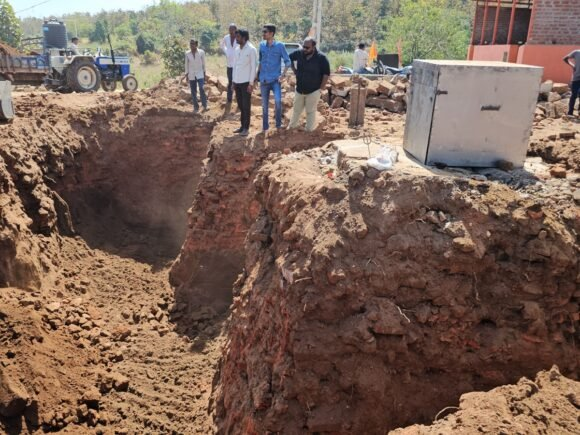
- Initial Site Condition
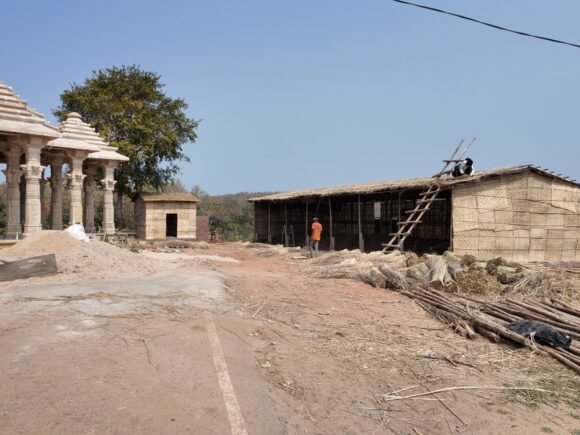
The existing structure near the temple marked the starting point of the Gurukul development.
Site inspection and planning were completed before expansion work began. 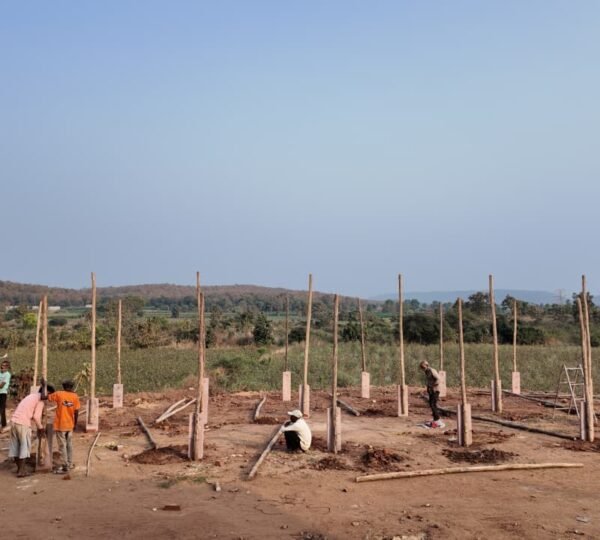 Layout Marking & Foundation Grid
The Gurukul layout was measured and marked according to the planned design. Pillar base
Positions were aligned to ensure structural balance and stability.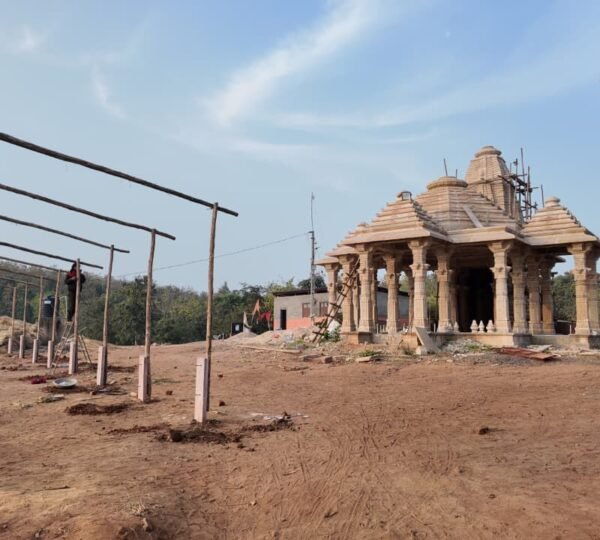 Installation of Structural Pillars
Vertical wooden pillars were erected across the marked grid. This formed the primary support
framework for the Gurukul structure.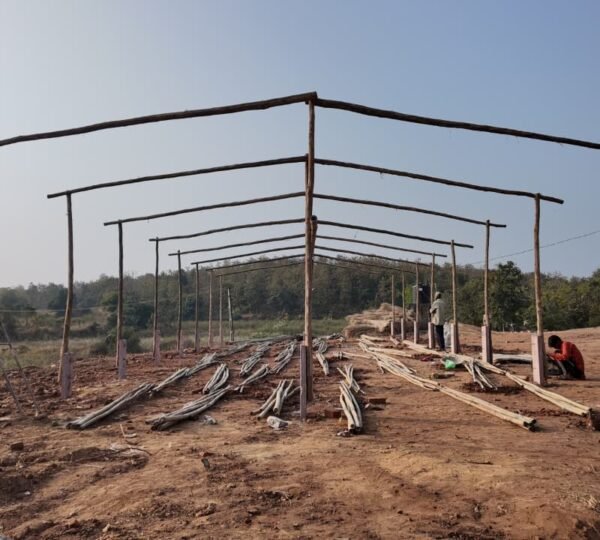
- Horizontal Beam Connection
Longitudinal beams were installed to connect all vertical supports. The structural skeleton of
The Gurukul began taking shape. 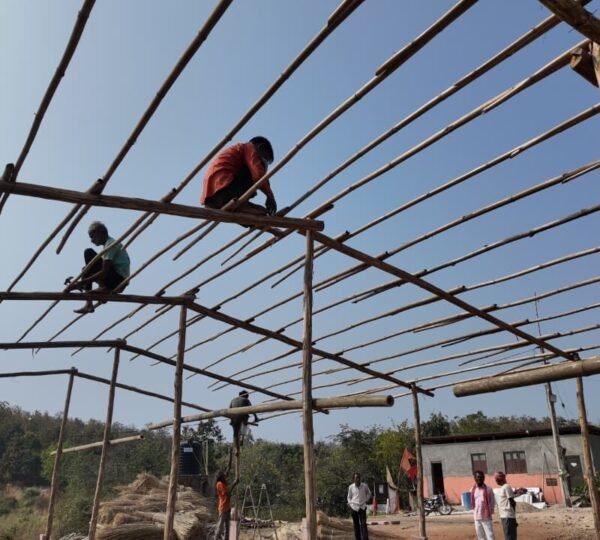 Roof Frame Alignment
Upper roof beams were carefully positioned to establish proper alignment and load
distribution. This stage defined the overall geometry of the structure.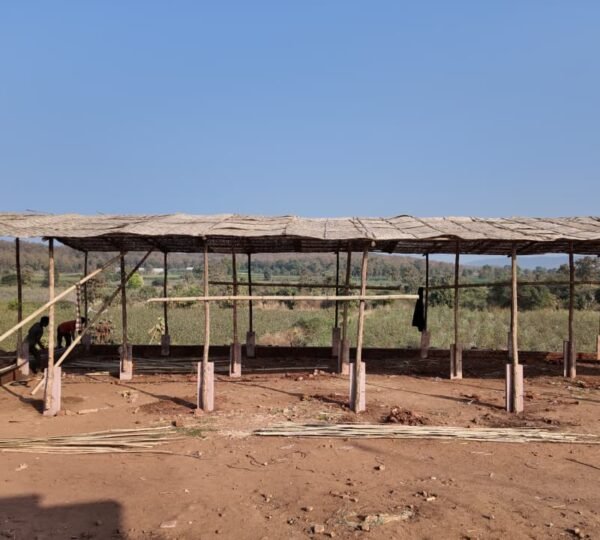 Roofing Framework Installation
Workers completed the cross-beam installation to strengthen the roofing base. The frame was
reinforced to support traditional roofing material.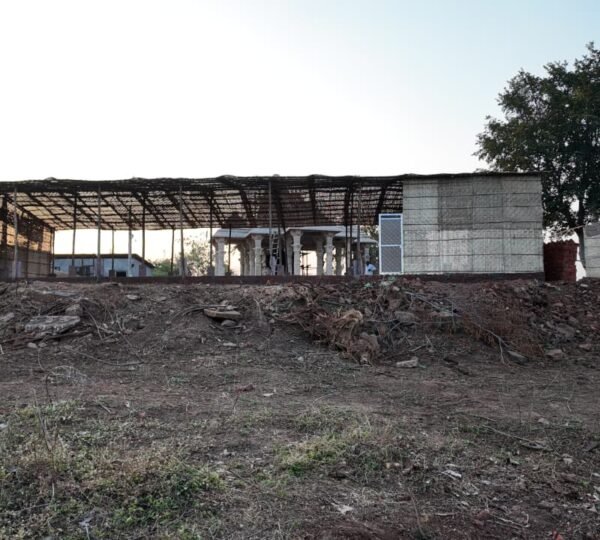 Roof Covering Placement
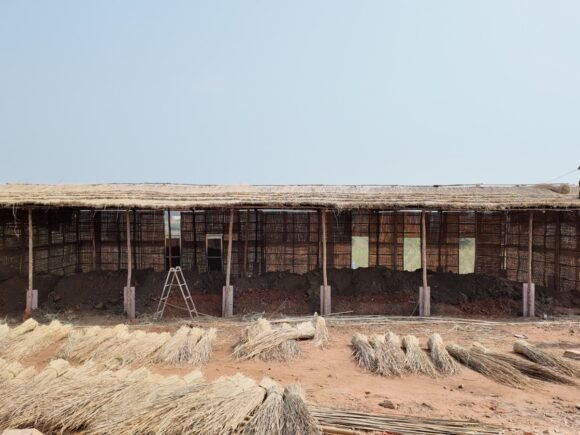
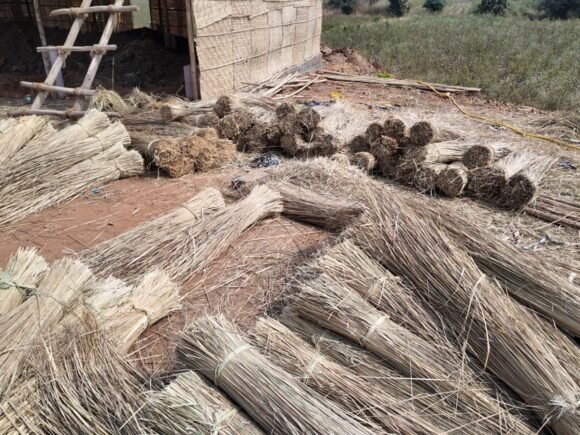
Natural thatch roofing was installed over the wooden framework. This provides shade, insulation, and protection from weather conditions.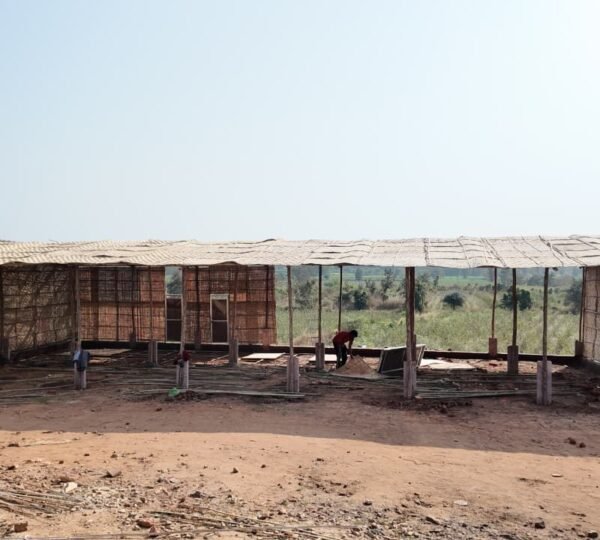
- Wall Enclosure Development
Traditional woven wall panels were fitted around the structure. The Gurukul space began
transforming from an open frame into an enclosed learning environment. 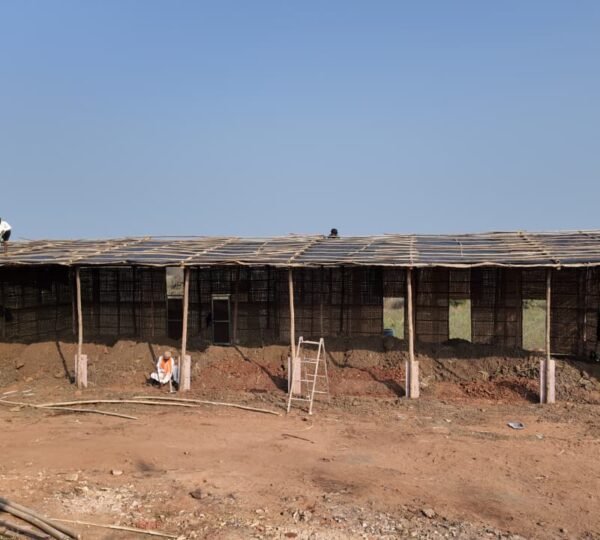 Primary Structure Completion
The main structural framework, roof, and wall installation were completed. The Gurukul now
stands ready for interior development and finishing work.