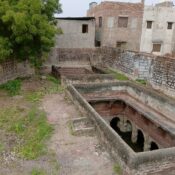
Amrit Vav, also known as Navgrah Vav, is a seven-storey Gaekwad-era stepwell in Vadodara. Over three months, a thousand volunteers emptied it of nine hundred tonnes of silt and waste and returned it to the city. It is the largest project Team Ramdoot Restores has taken on, and the one every other site is measured against.
A thank-you gift to the city
In February 1891, Vadodara’s Mahajan community held a public celebration for the recovery of Maharaja Sayajirao Gaekwad III. To mark it, Govindrao Vishnu Dev, a city vakil, endowed ₹3,500 for a work of public utility. That money built this stepwell. The finished cost was ₹5,755-8, recorded on a marble plaque dated 27 May 1892.
It was a working piece of civic infrastructure as much as a monument. Seven storeys of stepped descent lead down to the water table, giving the neighbourhood drinking water and cool shade through the Gujarat summer, free to anyone who walked down.
What we found
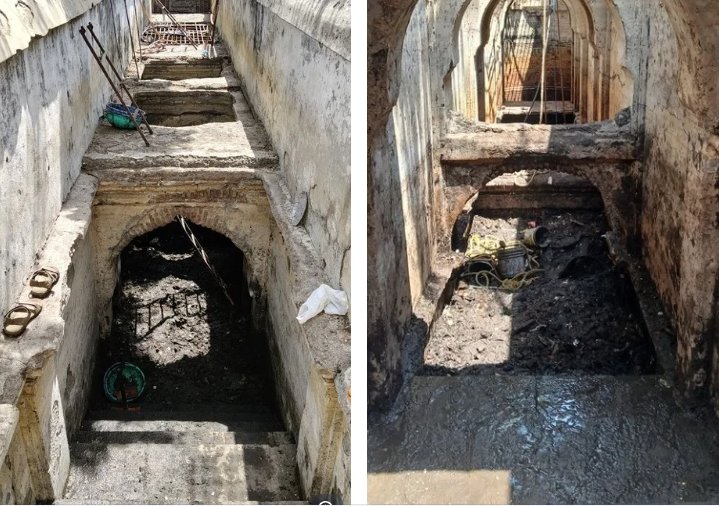
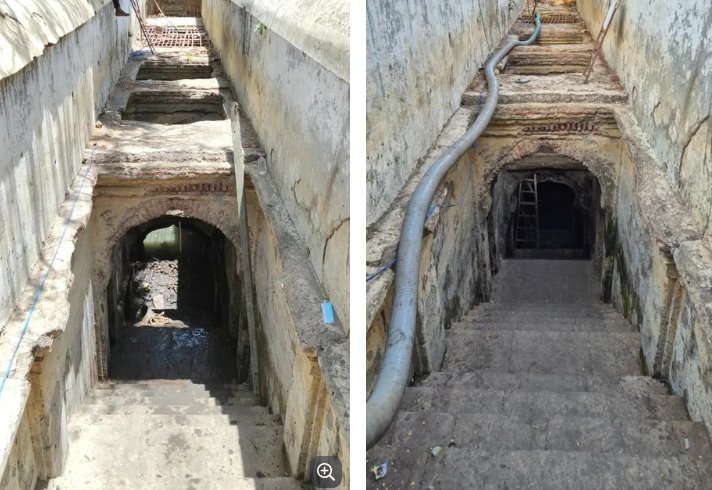
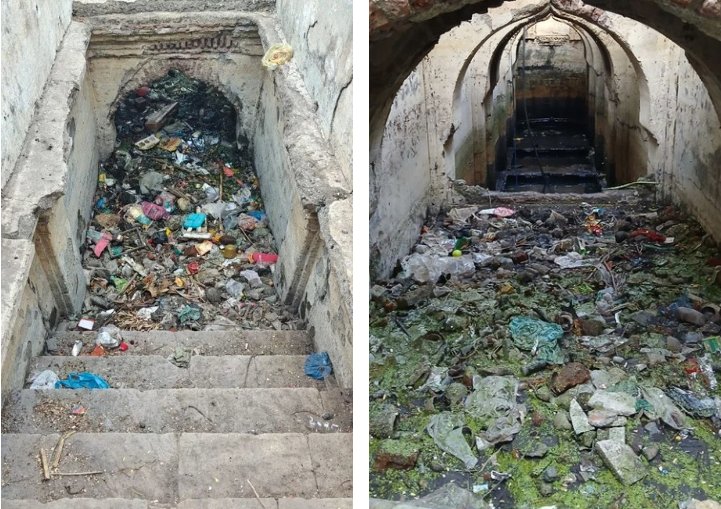
The vav had been buried under decades of dumped waste. On the first flight, household waste and plastic were packed solid over the treads, and the arched niches on both walls were buried up to the springing line. Once the upper two storeys of garbage and silt were removed, the lower chamber opened up for the first time, though it was still holding silt.
900 tonnes, carried out by hand
No excavator can reach inside a stepwell. Everything came up the same steps it went down, one bucket line at a time, and was sorted at the surface into waste, silt and any stone fragment worth keeping.
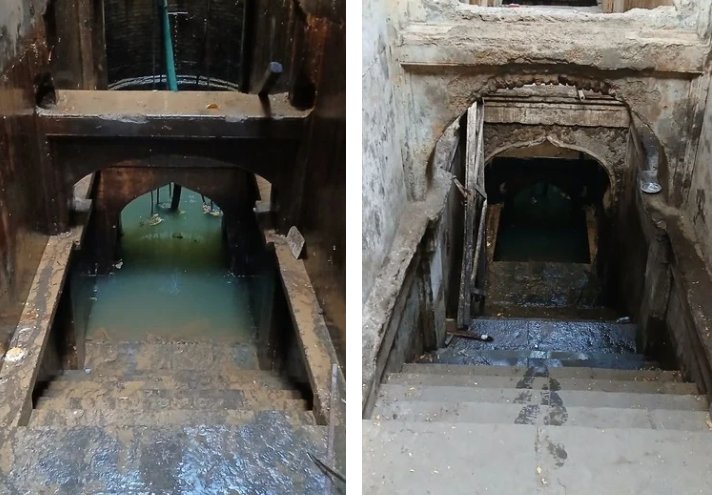
The work ran in three stages over three months: first the vav as found, with silt and debris across the lower flights; then mid-stage, with the upper two storeys emptied; and finally with the silt fully removed down to the original floor. Nothing here was rebuilt. It was uncovered.
The well came back
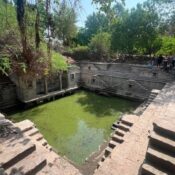
The original treads are intact, the wall niches are legible again, and the descent is open all the way through to the shaft. Residents can walk down to the lower chamber for the first time in living memory. Once the silt column was lifted, the shaft recharged and standing water returned to the bottom of the vav. The structure is doing exactly what it was built to do in 1892.
So did four endangered turtles
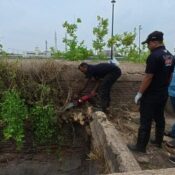
During the clearing, volunteers recovered four Indian softshell turtles alive from the waterlogged silt of the lowest chamber. The species is endangered and protected. These were full-grown adults that had been living in a sealed, contaminated pocket of water with no way out. Trained volunteers lifted them out by hand and kept them in clean water on site until the government animal rescue department collected them.
At a glance
- Also known as: Navgrah Vav
- Location: Vadodara, Gujarat
- Endowed: 17 February 1891, ₹3,500
- Completed: 27 May 1892, ₹5,755-8
- Built by: Govindrao Vishnu Dev, vakil
- Protection status: None, unlisted
- Removed: 900 tonnes of silt and waste
- Rescue: 4 endangered Indian softshell turtles saved
- Outcome: 7 storeys reopened, water returned
Nothing here was rebuilt. It was uncovered.
Photographs